Get ready to dive into the versatile world of nonwoven fabric applications, where we explore its diverse uses and sustainable solutions. Brace yourself for an informative yet entertaining journey ahead!
Introduction to Nonwoven Fabric
Nonwoven fabric is a type of material that is made directly from fibers rather than being woven or knitted together. This results in a fabric that is lightweight, breathable, and versatile in its applications. The manufacturing process of nonwoven fabrics involves bonding fibers together using various techniques such as chemical, mechanical, or thermal processes. These methods help create a cohesive fabric structure without the need for weaving or knitting.
Comparison with Woven Fabrics
Nonwoven fabrics differ from woven fabrics in terms of their structure and properties. While woven fabrics are made by interlacing yarns together in a specific pattern, nonwoven fabrics are created by bonding or felting fibers together. This results in nonwoven fabrics being more cost-effective to produce and having different characteristics such as being more porous, softer, and having better liquid repellency.
- Woven fabrics have a regular and uniform structure due to the interlacing of yarns, while nonwoven fabrics can have a random or directional fiber orientation.
- Nonwoven fabrics are often used for disposable products such as face masks, wipes, and medical gowns due to their cost-effectiveness and ease of production.
- Woven fabrics are generally more durable and have higher tensile strength compared to nonwoven fabrics.
Applications of Nonwoven Fabrics
Nonwoven fabrics find a wide range of applications across various industries due to their versatility, cost-effectiveness, and durability.
Medical Applications
Nonwoven fabrics play a crucial role in the medical field, particularly in the production of surgical masks and gowns. These fabrics are preferred for their ability to provide a protective barrier against pathogens while remaining breathable and comfortable for healthcare workers.
- Surgical Masks: Nonwoven fabrics are used in the inner and outer layers of surgical masks to filter out particles and prevent the spread of infectious diseases.
- Surgical Gowns: Nonwoven fabrics are also used in the manufacturing of surgical gowns to provide protection against liquid penetration and contamination during medical procedures.
Automotive Sector
In the automotive industry, nonwoven fabrics are utilized for various applications such as insulation and upholstery, offering numerous benefits including noise reduction, thermal insulation, and enhanced comfort.
- Insulation: Nonwoven fabrics are used as insulation materials in vehicles to reduce noise and vibrations, creating a quieter and more comfortable driving experience.
- Upholstery: Nonwoven fabrics are also commonly used for automotive upholstery due to their durability, flexibility, and ease of installation, providing both aesthetic appeal and functionality.
Environmental Impact and Sustainability
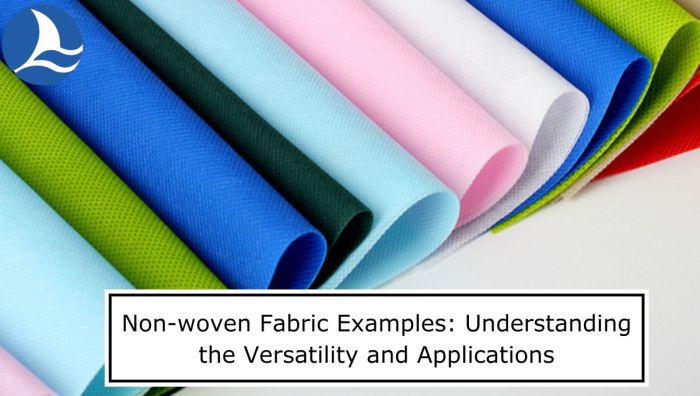
Nonwoven fabrics have gained attention for their potential environmental benefits compared to traditional textiles. Let’s explore the eco-friendliness, recyclability, biodegradability, and innovative approaches to enhance sustainability in the nonwoven fabric industry.
Eco-Friendliness of Nonwoven Fabrics
Nonwoven fabrics are often considered more eco-friendly than traditional textiles because they require less water, energy, and raw materials during production. The manufacturing process of nonwoven fabrics also generates less waste and emissions, contributing to a lower carbon footprint compared to conventional textiles.
Recyclability and Biodegradability
One of the key advantages of nonwoven fabrics is their recyclability. These fabrics can be recycled and used in various applications, reducing the amount of waste ending up in landfills. Additionally, some nonwoven fabrics are biodegradable, meaning they can naturally decompose over time without causing harm to the environment.
Innovative Approaches for Sustainability
To make nonwoven fabrics even more sustainable, manufacturers are exploring innovative approaches such as using recycled fibers, incorporating biodegradable materials, and adopting advanced production techniques that minimize environmental impact. These efforts aim to improve the overall sustainability of nonwoven fabrics and promote a more environmentally friendly textile industry.
Advancements and Emerging Trends
Nonwoven fabrics have come a long way with advancements in technology and emerging trends shaping the industry. Let’s explore some of the latest developments in the world of nonwoven fabrics.
Latest Technologies for Quality Improvement
In recent years, there has been a significant focus on improving the quality of nonwoven fabrics through the use of advanced technologies. One such technology is the use of meltblown technology, which involves the extrusion of polymer resins to create ultra-fine fibers. These fibers are then randomly laid to form a nonwoven fabric with enhanced strength, softness, and filtration properties.
This technology has revolutionized the production of nonwoven fabrics, making them more versatile and efficient.
Incorporating Antimicrobial Properties for Hygiene
With the growing emphasis on hygiene and cleanliness, there is a rising trend in incorporating antimicrobial properties in nonwoven fabrics. Antimicrobial agents are integrated into the fabric during the manufacturing process to inhibit the growth of bacteria, fungi, and other harmful microorganisms. This not only helps in maintaining a hygienic environment but also extends the lifespan of the fabric by preventing microbial degradation.
Nonwoven fabrics with antimicrobial properties are widely used in medical textiles, personal care products, and household items.
Potential of Nanotechnology in Enhancing Performance
Nanotechnology has opened up new possibilities for enhancing the performance of nonwoven fabrics. By incorporating nanoparticles into the fabric structure, manufacturers can improve properties such as strength, durability, and barrier protection. Nanotechnology also enables the development of smart textiles with functions like self-cleaning, self-healing, and temperature regulation. The use of nanotechnology in nonwoven fabrics is still in its early stages, but the potential for innovation and growth in this area is immense.
TEXTILES AND NONWOVENS
Textiles and nonwovens are both used in a wide range of everyday products, but they differ in terms of structure and production processes.
Differentiation between Textiles and Nonwovens
Textiles are typically woven or knitted fabrics made from yarn, while nonwovens are produced by bonding fibers together through mechanical, chemical, or thermal processes without the need for weaving or knitting.
Examples of Textiles and Nonwovens in Everyday Products
- Textiles: Cotton shirts, denim jeans, wool sweaters
- Nonwovens: Disposable wipes, surgical masks, filtration media
Advantages and Disadvantages of Using Textiles over Nonwovens
Textiles offer durability and breathability due to their woven or knitted structure, making them suitable for clothing and home textiles. However, nonwovens are often preferred for disposable products like wipes and masks due to their cost-effectiveness and ease of production.
Last Recap
As we wrap up our exploration of nonwoven fabric applications, we’ve uncovered the practicality and sustainability behind this innovative textile. From medical to automotive industries, the possibilities are endless!
FAQ Explained
How are nonwoven fabrics different from woven fabrics?
Nonwoven fabrics are made directly from fibers without the need for yarns, unlike woven fabrics that are made by interlacing yarns together.
What are some common industries that use nonwoven fabrics?
Nonwoven fabrics are commonly used in industries such as healthcare (surgical masks, gowns), automotive (insulation, upholstery), and agriculture (crop protection).
Are nonwoven fabrics eco-friendly?
Nonwoven fabrics can be eco-friendly depending on the materials used and their recyclability. Some nonwoven fabrics are biodegradable and recyclable.