Get ready to dive into the exciting world of Textile industry trends 2025! From expected growth patterns to the influence of technology, this topic is sure to keep you intrigued.
Let’s explore what the future holds for the textile industry and how it’s evolving to meet the demands of tomorrow.
Textile Industry Trends 2025
The textile industry is poised for significant growth and transformation by 2025, driven by various factors such as technological advancements, changing consumer preferences, and sustainability initiatives.
Impact of Technological Advancements
Technological innovations like automation, artificial intelligence, and 3D printing are reshaping the textile sector. These advancements streamline production processes, reduce lead times, and improve product customization, ultimately enhancing efficiency and productivity within the industry.
Key Market Drivers
1. Sustainability Initiatives
With increasing awareness about environmental issues, consumers are demanding eco-friendly and sustainable textile products. This shift towards sustainability is driving companies to adopt green practices and develop innovative solutions for sustainable manufacturing processes.
2. Digitalization and E-commerce
The rise of digital platforms and e-commerce has revolutionized the way textiles are marketed and sold. Online retail channels provide a global reach for textile manufacturers, enabling them to reach a wider audience and cater to changing consumer trends more effectively.
3. Shift towards Smart Textiles
The growing demand for smart textiles embedded with sensors and wearable technology is another key driver shaping the industry landscape. These high-tech fabrics offer functionalities such as temperature regulation, moisture-wicking, and health monitoring, catering to the increasing demand for functional and innovative textile products.
4. Reshoring and Local Production
The COVID-19 pandemic highlighted the vulnerabilities of global supply chains, leading to a resurgence of interest in reshoring and local production. By bringing manufacturing closer to home, companies can reduce lead times, improve quality control, and respond more quickly to market demands, contributing to the overall growth of the textile industry.
Sustainability in Textile Manufacturing
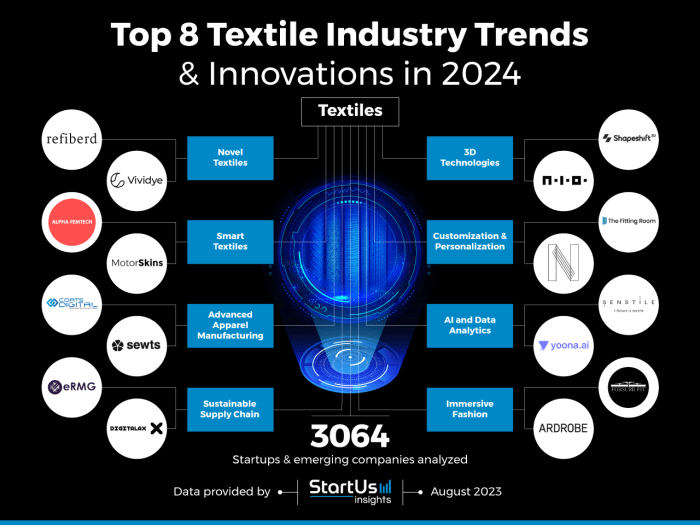
As environmental concerns continue to rise, the textile industry is increasingly focusing on sustainable practices in manufacturing.
Adoption of Eco-Friendly Materials
Many companies are now shifting towards using eco-friendly materials such as organic cotton, bamboo, and recycled fibers in their production processes. These materials not only reduce the environmental impact but also cater to the growing demand for sustainable products.
Implementation of Sustainable Processes
Textile companies are also adopting sustainable processes like water recycling, energy-efficient manufacturing techniques, and reducing chemical usage. By implementing these practices, they are able to minimize their carbon footprint and contribute towards a greener future.
Comparison of Sustainability Approaches
- Some companies focus on creating fully biodegradable textiles to ensure minimal environmental impact.
- Others invest in innovative technologies like digital printing and 3D knitting to reduce waste and energy consumption.
- Certain brands prioritize fair labor practices and ethical sourcing of raw materials to ensure sustainability across the entire supply chain.
Digital Transformation in Textile Design
The digital transformation in textile design is reshaping the industry, bringing about innovative solutions and streamlined processes. This shift towards digitalization has significantly impacted how designers create and develop textiles.AI and automation play a crucial role in optimizing design workflows in the textile sector. These technologies enhance efficiency, accuracy, and creativity in the design process. By leveraging AI-powered tools, designers can generate unique patterns, colors, and textures, saving time and resources.
Innovative Digital Design Tools
- 3D Design Software: Advanced software applications allow designers to create realistic 3D models of their textile designs, enabling better visualization and customization.
- Digital Printing Technology: Digital printing has revolutionized the way textiles are produced, offering faster turnaround times and greater design flexibility.
- Virtual Prototyping: Virtual prototyping tools enable designers to simulate the look and feel of fabrics before production, reducing waste and cost.
- Computer-Aided Design (CAD): CAD software simplifies the design process by providing precise tools for pattern creation, resizing, and editing.
Textiles and Nonwovens
In the manufacturing context, textiles are materials composed of interlacing fibers, such as cotton, wool, or synthetic fibers, to create fabrics for various applications. On the other hand, nonwovens are made from fibers bonded together through mechanical, chemical, or thermal processes, without weaving or knitting.Nonwovens have a wide range of applications across different industries due to their versatility and unique properties.
Some common uses include filtration in automotive and industrial applications, medical supplies like surgical masks and gowns, hygiene products such as diapers and wipes, and geotextiles for construction and landscaping.
Properties and Uses Comparison
Nonwovens:
- Properties: Nonwovens are often lightweight, breathable, and can be engineered for specific purposes like absorbing liquids or providing insulation.
- Uses: They are widely used in healthcare, automotive, construction, and agriculture industries for applications requiring disposable, cost-effective, and versatile materials.
Textiles:
- Properties: Textiles are typically woven or knitted fabrics with varying textures, strengths, and stretch capabilities depending on the type of fibers used.
- Uses: Textiles are commonly found in clothing, home furnishings, technical textiles, and industrial applications where durability, aesthetics, and comfort are important.
Closure
As we wrap up our discussion on Textile industry trends 2025, it’s clear that the landscape is changing rapidly. Stay tuned to see how these trends unfold in the coming years!
Common Queries
What are some key market drivers shaping the textile industry in 2025?
Market drivers such as technological advancements, sustainability practices, and digital transformation are expected to play a significant role in shaping the industry landscape in 2025.
How are companies adopting eco-friendly practices in textile manufacturing?
Companies are increasingly using eco-friendly materials and processes to reduce their environmental impact and meet the growing demand for sustainable products.
What is the role of AI and automation in textile design processes?
AI and automation are revolutionizing textile design workflows by streamlining processes, increasing efficiency, and enabling innovative design solutions.
What are the main differences between textiles and nonwovens in manufacturing?
Textiles are traditional woven or knitted fabrics, while nonwovens are engineered materials made without weaving or knitting. Nonwovens have diverse applications in various industries due to their unique properties.
How do sustainability practices vary within the textile industry?
Companies adopt different approaches to sustainability, including using organic materials, reducing water and energy consumption, and implementing recycling programs to minimize waste.